BTME 2025 Harrogate, what else did we take home besides the technical ball?
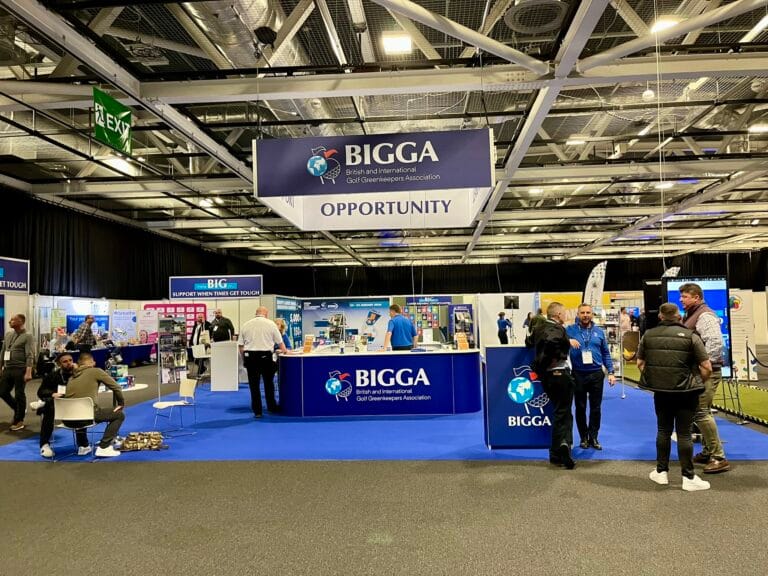
BTME (BIGGA Turf Management Exhibition), or as we more commonly know it, Harrogate, gathers sports turf professionals to this charismatic English town every year. The exhibition is the largest event in Europe dedicated to course management, drawing an estimated more than 5,000 visitors and over 150 exhibitors. The event offers a unique opportunity to network, learn about the latest innovations in the industry and gain inspiration for one’s own work.
There were approximately 30 attendees from Finland, and a total of 100 professionals from the Nordic countries! For me personally, the exhibition was particularly rewarding, much more than a traditional trade show. BTME is a hectic experience, and everyone builds their own version of it. Now it feels good to share what my own experience included.
Seminars and training
BTME invests heavily in seminars and training. On Tuesday and Wednesday, visitors had the opportunity to attend free seminars, and this year the standard was particularly high. So high, in fact, that next time I am considering investing in the paid training package available during the early days of the week. The open seminars covered a wide range of themes and were presented by various exhibitors. The R&A had a strong presence with themes around sustainability and sustainable course management.
Better outcomes through data and research
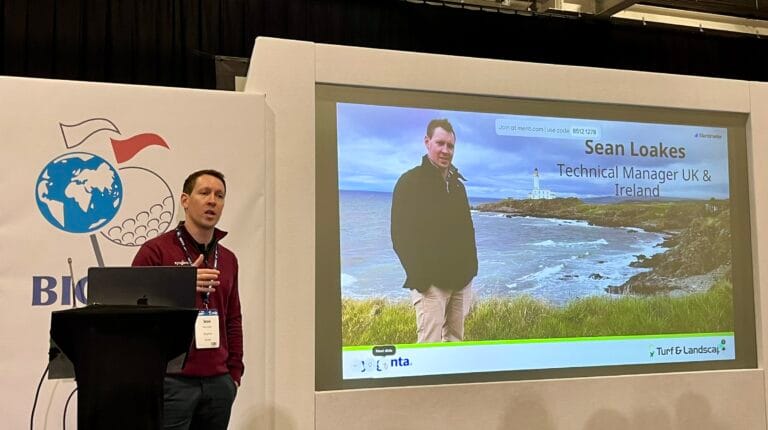
Sean Loakes’ “Microdochium Matters” seminar from Syngenta was one of the biggest crowd-pullers, and not everyone who wanted to attend could even fit inside. The presentation was interactive and focused on managing snow mould. Sean covered the correlation between the pathogen and conditions in a comprehensive way. I was particularly excited by the chart showing how many favourable hours per day the pathogen has in terms of temperature. Sympathies to Dublin, where 77% of all hours in the year fell within that range! This calculation exercise definitely goes onto the follow-up list, so we can assess what the figures look like for Finland.
An update is coming to the Microdochium model in the TurfAdvisor app that will take into account different forms of moisture and thereby improve the model’s performance. Also interesting were the results of a survey conducted among UK course managers regarding the correlation between nitrogen levels and snow mould, according to the data, the annual nitrogen amount did not significantly correlate with the occurrence of the disease. This underlines just how complex the issue is.
As a myth-buster in my own life, I also attended Andy Owen and Henry Bechelet’s seminar “Myths and Misunderstandings”. The aim of the presentation was to demonstrate how strongly all actors in the industry influence one another, and how beliefs can become established even when new scientific evidence exists. One key problem is excessive simplification, when things are generalised too much, it easily leads to incorrect conclusions. This highlights the need to bring research-based knowledge more effectively into the industry’s use.
Trends in course construction and maintenance
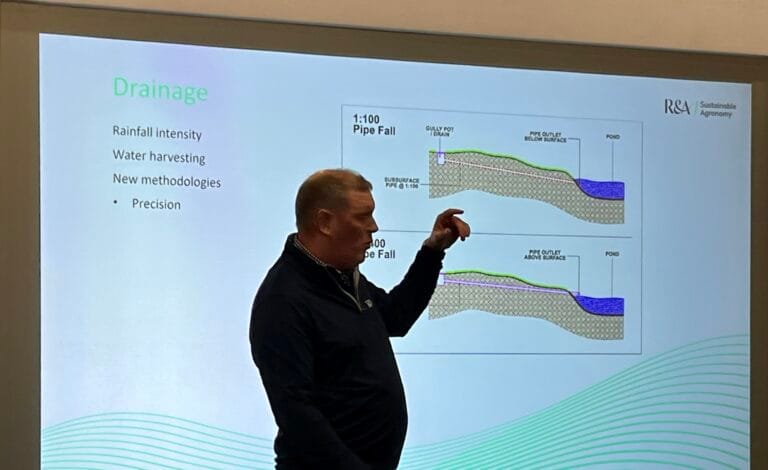
The R&A’s Gordon Howat covered the trends of 2025 in terms of course construction, drainage and improvements. Changes are driven above all by the changing climate, legislation, resources, technology and the expectations of golfers. Gordon emphasised that not only do improvements aim to increase the resilience of the course, but sustainable development has stepped into the picture to stay. Biodiversity Net Gain (BNG) is one of the key concepts, and in Britain, new legislation requires development projects to deliver at least a 10% net gain in biodiversity.
Other significant trends included:
- Variable Depth Green Rootzone, which relates to the thickness of the rootzone in greens.
- Drainage calculations to prepare for heavy rainfall, solutions for managing water masses.
- Improvements in irrigation technology aimed at increasing water-use efficiency.
One of the R&A’s seminars also addressed golf courses of the future. Trends identified included shorter courses, fewer bunkers, better practice areas, small practice areas for children, tighter fairways (less maintained surface area), conservation and more efficient use of resources, and accreditations related to sustainable development and responsibility. Golf courses must develop continuously, and the R&A supports courses in this transformation.
Technologies and innovations
Indigrow’s technical specialist Tom Morris took a deep dive into the nutrient uptake mechanisms of grasses in relation to liquid fertilisers. Nutrient use is directly linked to environmental friendliness, cost-efficiency and sustainable development. Tom highlighted some interesting points from scientific research. For example, most of the sprayed nutrients are taken into the plant within the first 4 hours, and 76% of nitrogen is absorbed into the plant within 24 hours. This information is used in product development, when you know that the product should contain certain properties, you can focus on these and improve nutrient use efficiency towards the maximum.
The SolarMax range developed by Indigrow, which has a gel-like composition, has brought significant advantages compared to traditional liquid fertilisers. The gel composition spreads more evenly on the leaf, adheres better to the leaf thanks to adhesion, does not stratify during storage, and has a higher nutrient concentration in relation to volume, which reduces the product’s carbon footprint. In addition, product trials observed that leaching downwards in the soil profile is slower than with water-soluble fertilisers. As an important reminder, Tom pointed out that if the root system is in poor oxygen conditions or in a weak state, the spraying should be applied to the leaf.
Organic and organic-mineral fertilisers are attracting more and more interest. Evert Verstreken’s topic was Sustainability in organic fertilisers. Evert gave us an in-depth introduction to their operating model. At DCM, 75% of organic raw materials come from side streams of the food industry, and 80% are sourced within a radius of less than 150 km from the production facility. The organic raw materials are standardised as far as possible, which means that the nutrient values of the raw material are known, and by combining different raw materials it is possible to create unique formulations with a predictable nutrient release rate. With experience from several fertiliser factories, I can say that DCM’s facility is one of the cleanest and most advanced, making use of the latest technology and automation.
DCM’s approach and actions in the field of sustainable development and responsibility are of an extremely high standard and aligned with Berner’s sustainability strategy. DCM is increasingly investing in research and development, and they have 23 in-house researchers. We have trial activities planned with DCM for the coming season, and we hope to be able to present the results at the November seminar.
GolfCourse2030
John Kemp and Dr. John Fry presented the GolfCourse2030 project in their seminar Priorities for a Sustainable Future. The speakers placed the golf course customer, the golfer, at the centre and examined how changing expectations and climate change affect course management.
Climate change does not only create pressure on course management practices, it also guides consumers’ choices and lifestyles in an increasingly sustainable direction. The presentation contrasted, on the one hand, customers who increasingly make their decisions based on responsibility and ecological considerations, and on the other hand, the pressure created by the media for the so-called Augusta National syndrome, that is, the wasting of resources and excessive course management. According to the speakers, there is a place in the world for such courses, but they should not be the target model for all golf courses.
John Fry emphasised that every course should identify its own product profile and execute it excellently. Player surveys around the world show that the success of a golf club depends on its ability to identify its target customers and to create meaningful experiences and a sense of belonging for them.
This raises the question, how successful have we been in Finland at identifying our target customers?
Highlights from the exhibition floor
There was plenty to see on the exhibition floor, and the aisles and stands were bustling with crowds. For me, what is particularly valuable at these events is the opportunity to meet the staff of our suppliers and exchange ideas with them. Many of our suppliers have technical expert teams with whom you can engage in in-depth discussions about research and product development already carried out as well as future innovations. In addition, it is inspiring to talk with sales organisations and compare the differences and similarities between markets in different countries.
DCM was represented at the BTME exhibition together with its British distributor, which has succeeded in establishing its position in Scotland. There, DCM’s products have achieved the desired response and user experience, while at the same time meeting the high sustainability requirements and the framework of legislation.
Indigrow, on the other hand, focused their stand on their wetting agent portfolio, which they have developed in a determined way to meet their customers’ needs. Particularly rewarding was the discussion about soil analyses with the experts from Indigrow and ETL (European Turfgrass Laboratories), which provided new contacts and broadened the perspectives of both parties.
You can always trust Syngenta’s stand when you want to find something concrete and new. At the BTME 2025 exhibition, Syngenta presented the Evopac packaging system, which has been developed to reduce users’ exposure and to improve safety during spraying operations.
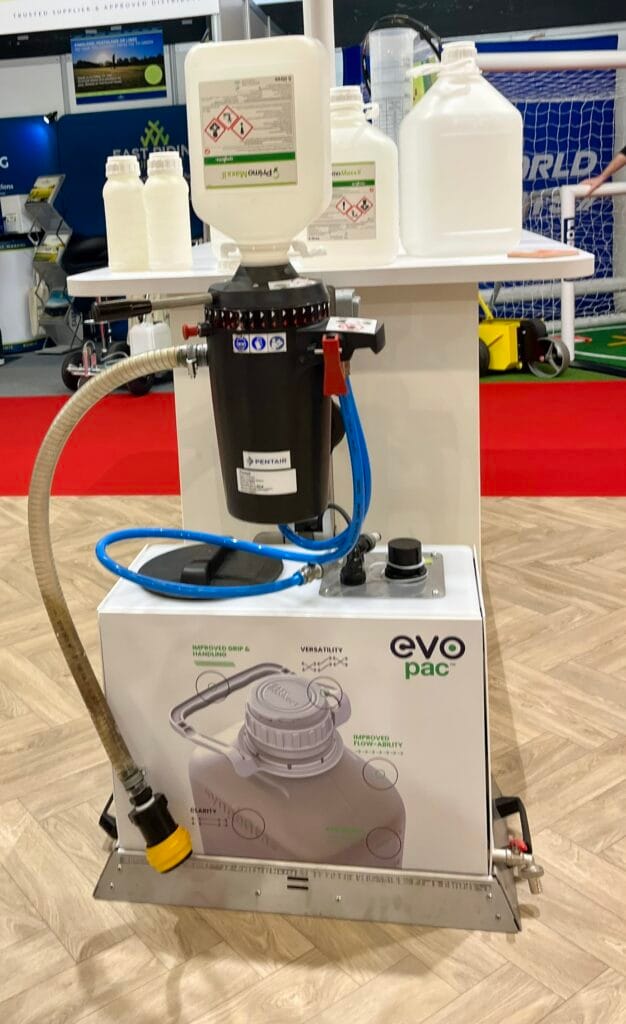
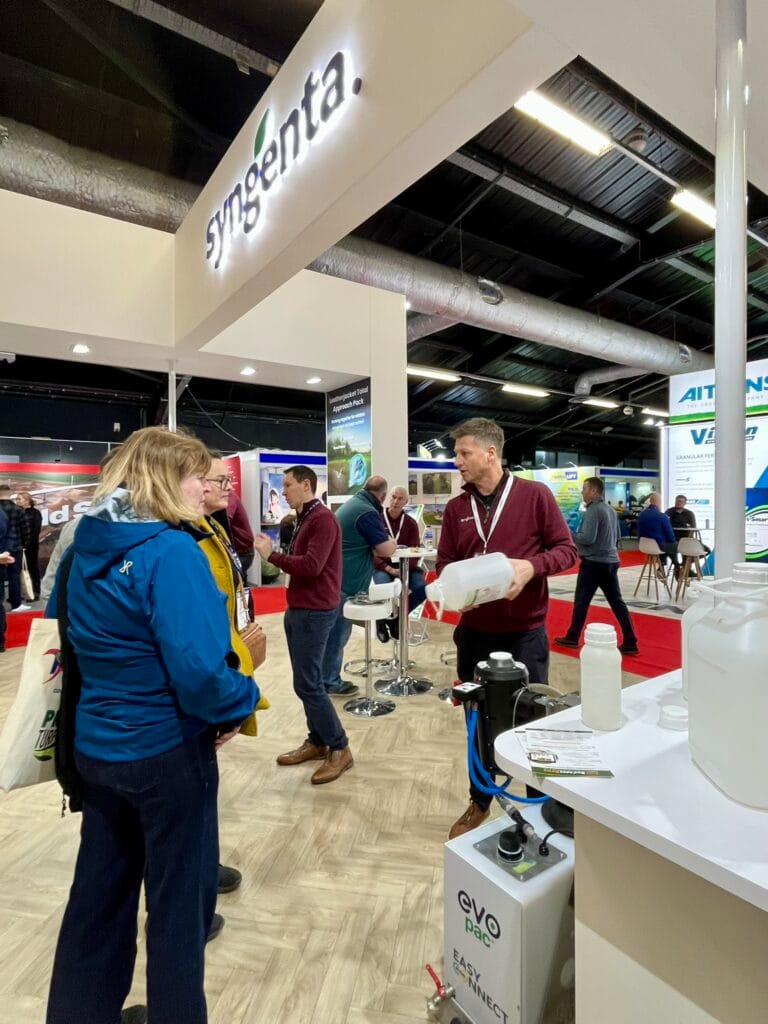
Evopac packaging is compatible with closed transfer systems such as the easyconnect coupler, which makes it possible to transfer the product directly into the tank without the user having to open or pour the container by hand. This significantly reduces the risk of splashes and exposure. The reform is driven, among other things, by recommendations from the Danish authorities to reduce exposure, and it is likely that similar practices will become key methods in the management of health and environmental risks in regulatory guidelines going forward.
Evopac packaging has been designed ergonomically and features, among other things, swivel handles and a transparent container, which improve handling and allow for more accurate measuring, thereby increasing both user comfort and safety. The change will be rolled out gradually, product by product.
I am not yet aware of where the closed transfer system can be purchased in Finland, but at the exhibition the price was estimated at around EUR 1,000-3,000 depending on the features of the equipment. The system can be installed either at the sprayer’s filling area or directly onto the sprayer. In the future, it is also possible that this technology will be integrated directly into sprayers as standard equipment. Safety first, folks!
Networking and post-exhibition reflections
The evening programme of the exhibition includes events organised by different exhibitors and the BIGGA awards ceremony, which offer good moments for networking in a more relaxed atmosphere. It was great that a large group from Finland made it to the exhibition. Many first-timers commented that the exhibition had been a good experience for them, and they had picked up all sorts of reading material from the stands for their journey home.
All in all, BTME 2025 was an excellent experience. What I took home were new contacts, ideas and innovations, and of course… the technical ball!


This article was originally published in January 2025 on the ammattinurmikot.fi website.