Due to the upcoming tightening of plant protection product regulations, or even the complete withdrawal of certain products in the near future, it is extremely important to find ways to reduce the disease pressure affecting the plant. Best turf management practices play a key role, but because of extreme conditions and the constantly rising quality demands, we need to find ways to minimise the damage caused by disease and to adopt proactive measures in high-risk conditions.
In Finland, we are generally very skilled and considerate users of plant protection products. A greenkeeping team that knows their course well is able to identify high-risk periods and react accordingly. Plant protection products also have good efficacy and are easy to rely on when a disease is about to activate or is already active. However, restrictions are coming regarding product quantities, application frequencies and active ingredients, which means it is time to learn other methods as well, even though the end result may not be quite what we are used to.
Indigrow originally developed Diamond Greenas a liquid fertiliser that would also have biostimulant properties. To this product, which contains calcium, potassium and magnesium, a natural oil extracted from conifers was added with the aim of giving the plant resilience in challenging conditions. Already during the development phase, indications of the product’s potential from a plant protection perspective were observed. Samples treated with Diamond Green consistently showed fewer visible signs of disease. Further testing, however, demonstrated that conifer-derived oils alone had no effect on the growth of pathogens, unlike chemical plant protection products. The conclusion drawn from the trials was that conifer oil has plant-strengthening properties, which makes it more difficult for plant diseases to infect the plant.
Trial at Hirsala Golf 2022
Diamond Green had delivered promising trial results elsewhere in Europe, but since in Finland we firmly hold to the saying “it doesn’t work in Finland”, it was time to test how the product performs in our conditions. One of Hirsala’s practice greens was selected as the trial site, which at the time of the trial was an approximately one-year-old creeping bentgrass green.
The trial design included four treatments
- Syngenta’s fungicide programme
- Indigrow’s biostimulant programme
- Hirsala’s reactive programme
- Control without plant protection products
Apart from these treatments, the entire green was maintained according to the normal course management programme. The whole area received the same fertilisation, growth regulator, biostimulants and wetting agent. Only the so-called plant protection sprayings differed between the treatments.
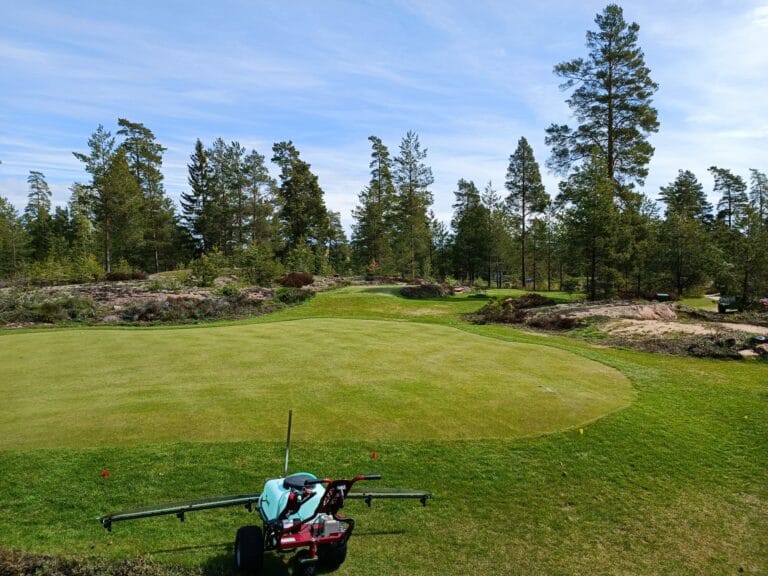
Trial green, treatments from left: Hirsala, Indigrow, Control, Syngenta.
In addition to Diamond Green, Indigrow’s programme included Asset biostimulants (Chitosan and Titanium) as well as Solar Energy, which is rich in magnesium. The spraying programme started in mid-May. A total of 8 sprayings were carried out during the season, plus one additional spraying with Diamond Green in January. Diamond Green was applied at a rate of 20-40 l/ha in each spraying. The sprayings were timed to reduce damage caused by Anthracnose, Take-all, Pythium and Microdochium.
Syngenta’s fungicide programme consisted of a total of six sprayings. Together with the three autumn sprayings (Ascernity, Instarta Elite and Medallion) , Ryder pigment was also used at a rate of 2 l/ha. Hirsala’s reactive programme differed from Syngenta’s programme in that an additional Medallion spraying was applied, and slightly more nutrients and biostimulants were used than on the other treatments, with nitrogen being approximately +6 kg higher compared to the other trial areas. By 17 November, all sprayings had been carried out, with the exception of the additional January sprayings on the Indigrow and Hirsala plots.
Disease observations
At the end of August, slight brown patch caused by Rhizoctonia was observed across all trial areas, but the disease did not develop into a serious problem.
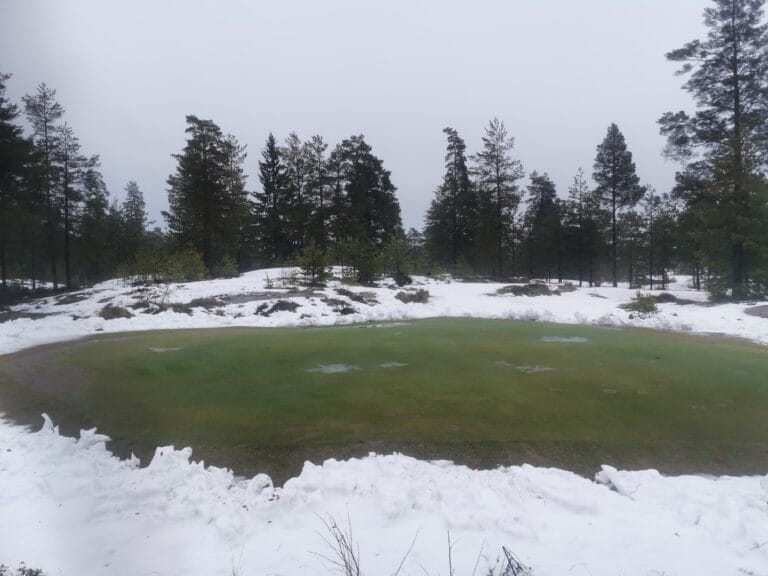
In November, snow mould caused by Microdochium nivale was observed on the control area, while the other treatments remained clean. Shortly after the final sprayings, snow arrived and then melted away in January. In January, the most snow mould was observed on the control, with some also appearing on the Indigrow treatment. A few patches were also seen on the edge of the Syngenta trial area, but otherwise the area was clean, as was the area on the Hirsala programme. At this stage, a supplementary spraying was carried out on the Hirsala plot, and a Diamond Green spraying was applied to the Indigrow treatment.
Hirsala’s reactive programme clearly delivered the best result for the spring. There were no major differences in nutrient quantities compared to the other treatments, but even with these small differences, a visible impact on the end result was achieved. In addition, the use of biostimulants at the end of the season, together with controlled iron applications, brought added value. The January Medallion + Ryder spraying was particularly visible in the spring colour compared to the other treatments.
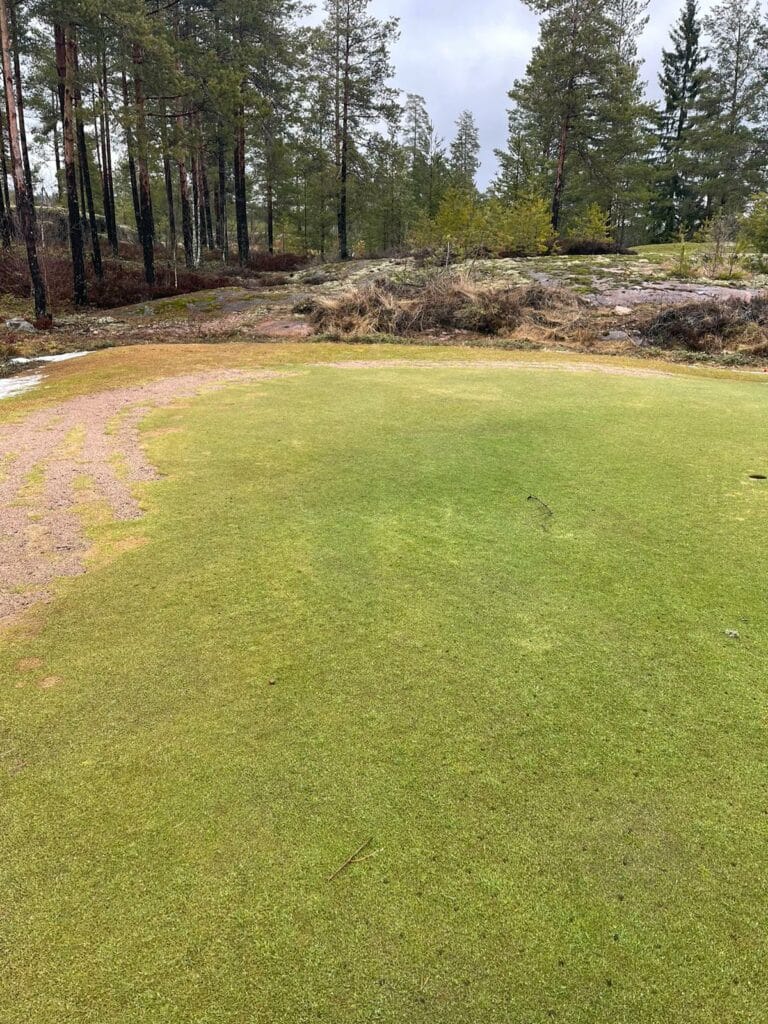
Hirsala program 23.3.2023.
The Syngenta trial area was clean of disease patches apart from a few spots. The few patches were suspected to have been caused by too rapid a starting speed with the sprayer during the final Medallion spraying. This clearly demonstrates how significant a role the technical execution of the spraying plays.
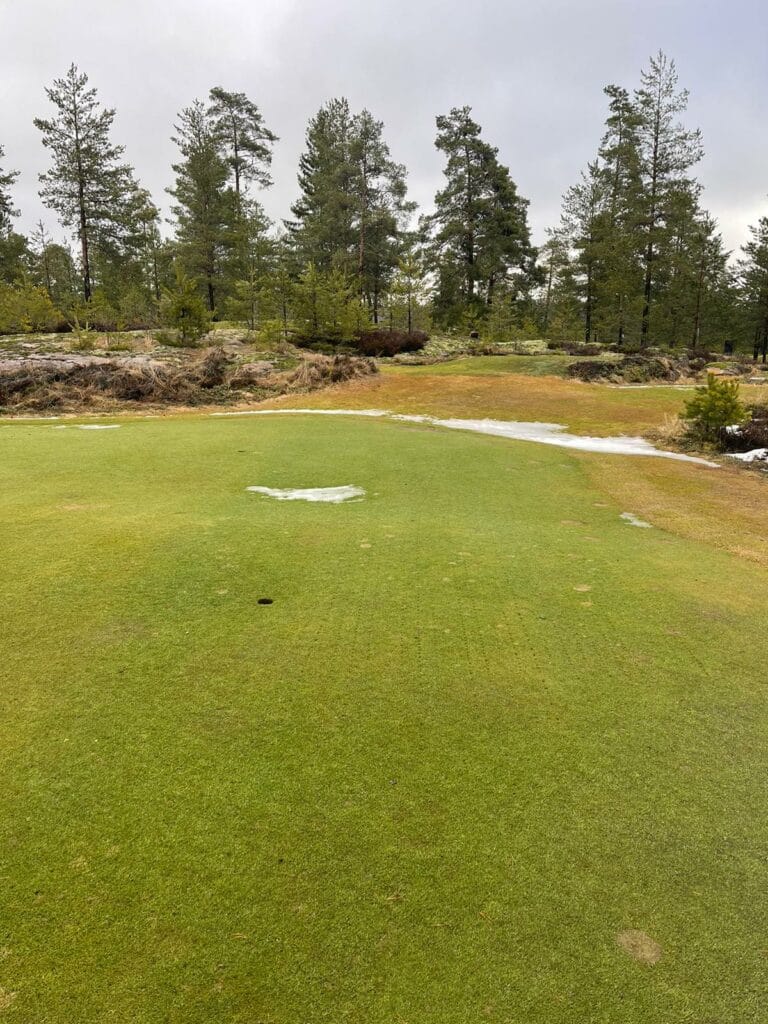
Syngenta 23.3.2023.
The Indigrow trial area had patches, but they were noticeably smaller and more superficial than those in the control. The amount of disease was also lower. The trial result is very interesting and provides good guidance, suggesting that disease pressure can be managed by approaching the topic through plant health and biostimulants.
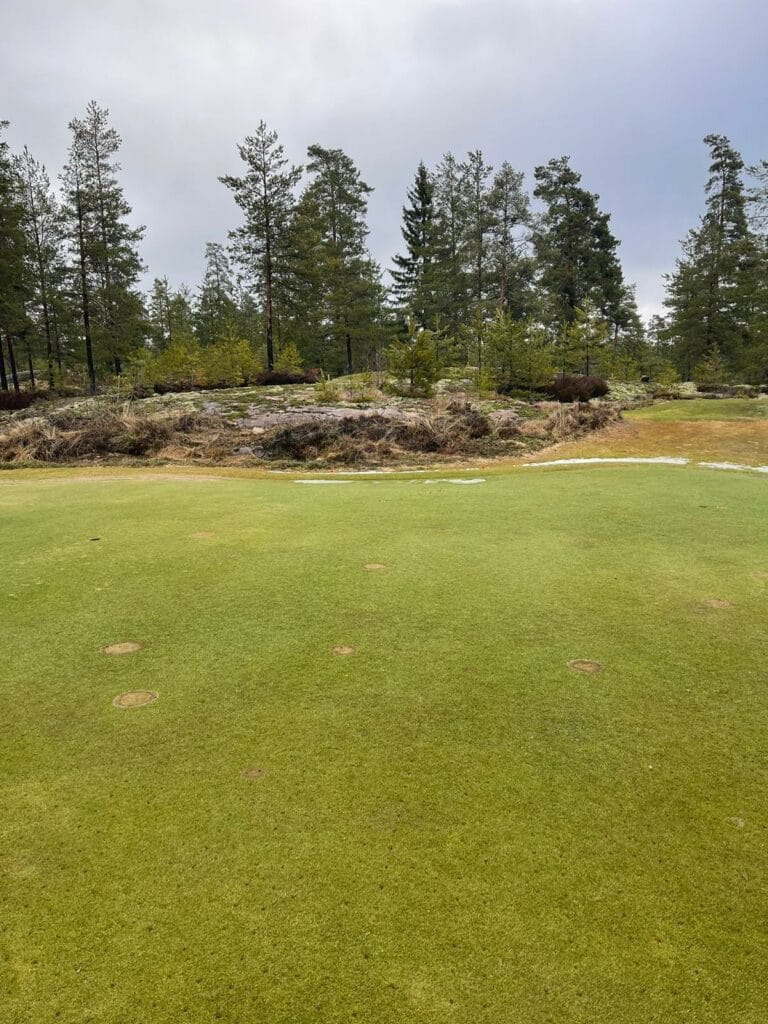
Indigrow 23.3.2023.
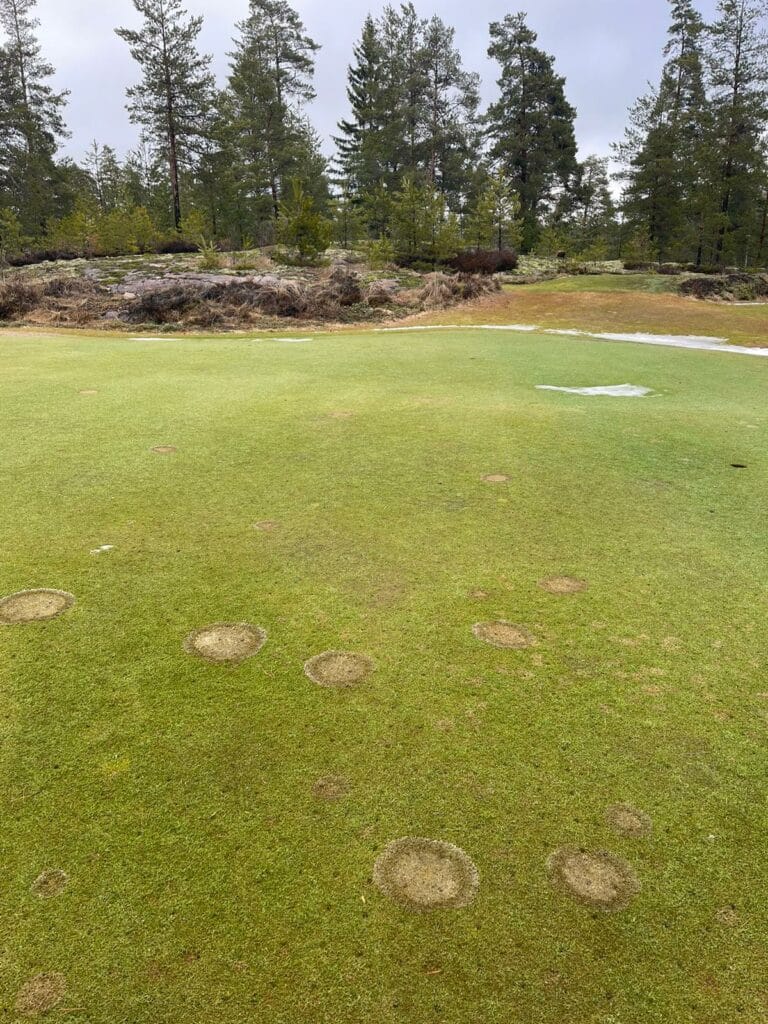
Control 23.3.2023.
Based on the observations made on the control during the season and in the spring, it can be concluded that the disease pressure was never particularly severe. The young, clean bentgrass sward was highly resistant, and the management practices were well aligned with the conditions. Disease did, however, appear clearly during the winter, which made it possible to see distinct differences between the control and the other treatments. The trial also highlights the significance of disease development that takes place under the snow, when we are unable to control the conditions, the disease has a good opportunity to develop.
Conclusions
Regarding the trial, it must be emphasised that nutrient levels were moderate and nutrients were added during the season according to the conditions. In addition, biostimulants and wetting agents were used diversely and purposefully across the entire area throughout the season. ITM (Integrated Turf Management) is an approach that combines all the proven best practices in course management. Based on my own observations, fewer diseases have been seen in Finland over the past few years (for example, the traditional midsummer Fusarium outbreak has been much milder than before), which I would attribute to the investment in, and increased knowledge of, biostimulants, nutrients and wetting agent programmes. When we focus on improving plant health and growing conditions, it is easier to fight diseases than to constantly run a step behind, fixing issues after they appear.
Following this successful trial, we were inspired to continue the trial activities into 2023 as well. The trial continues at Hirsala, and new trial work was started at Master on one of the old practice greens, in order to see how a mixed-grass green performs under different treatments. At Master, an additional treatment was added that combines Diamond Green with Medallion at the end of the season. The aim of this kind of trial design is to identify potential ways to reduce the use of plant protection products in the future.
P. S. We managed to secure a small batch of Diamond Green for sale this autumn, so if your interest has been sparked, please get in touch with us!
This article was originally published in August 2023 on the ammattinurmikot.fi website.