
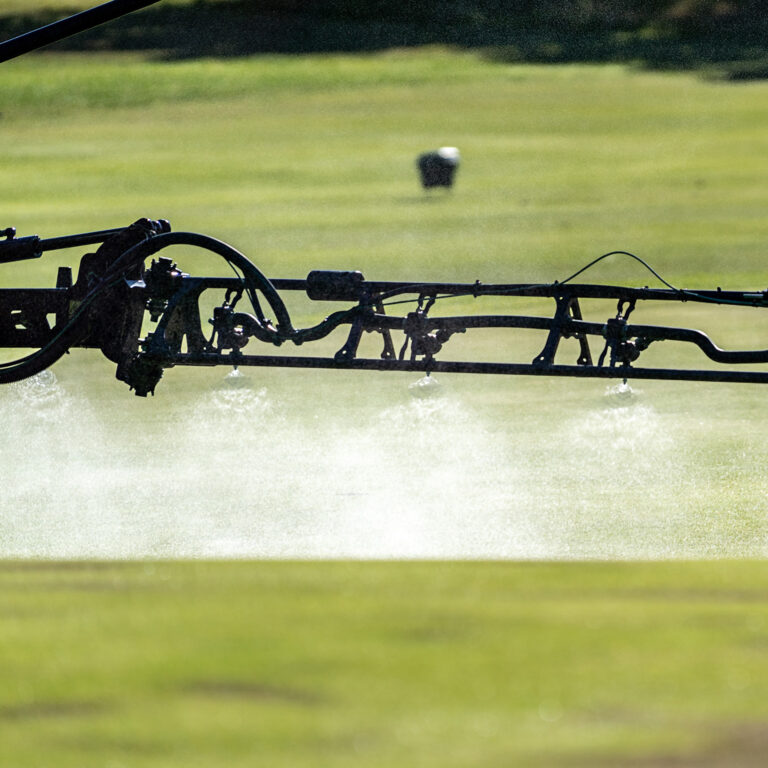
Autumn and early winter are the most critical time for the resilience of greens. As the plant’s natural defences weaken, the importance of plant protection is emphasised. Achieving the best result does not depend on the right product alone, but on the sum of three factors: monitoring the conditions, choosing the right products and applying a careful spraying technique.
1.Monitoring conditions: the foundation of decision-making
Effective disease control begins with understanding the conditions. Moisture and temperature are decisive factors in the build-up of disease pressure.
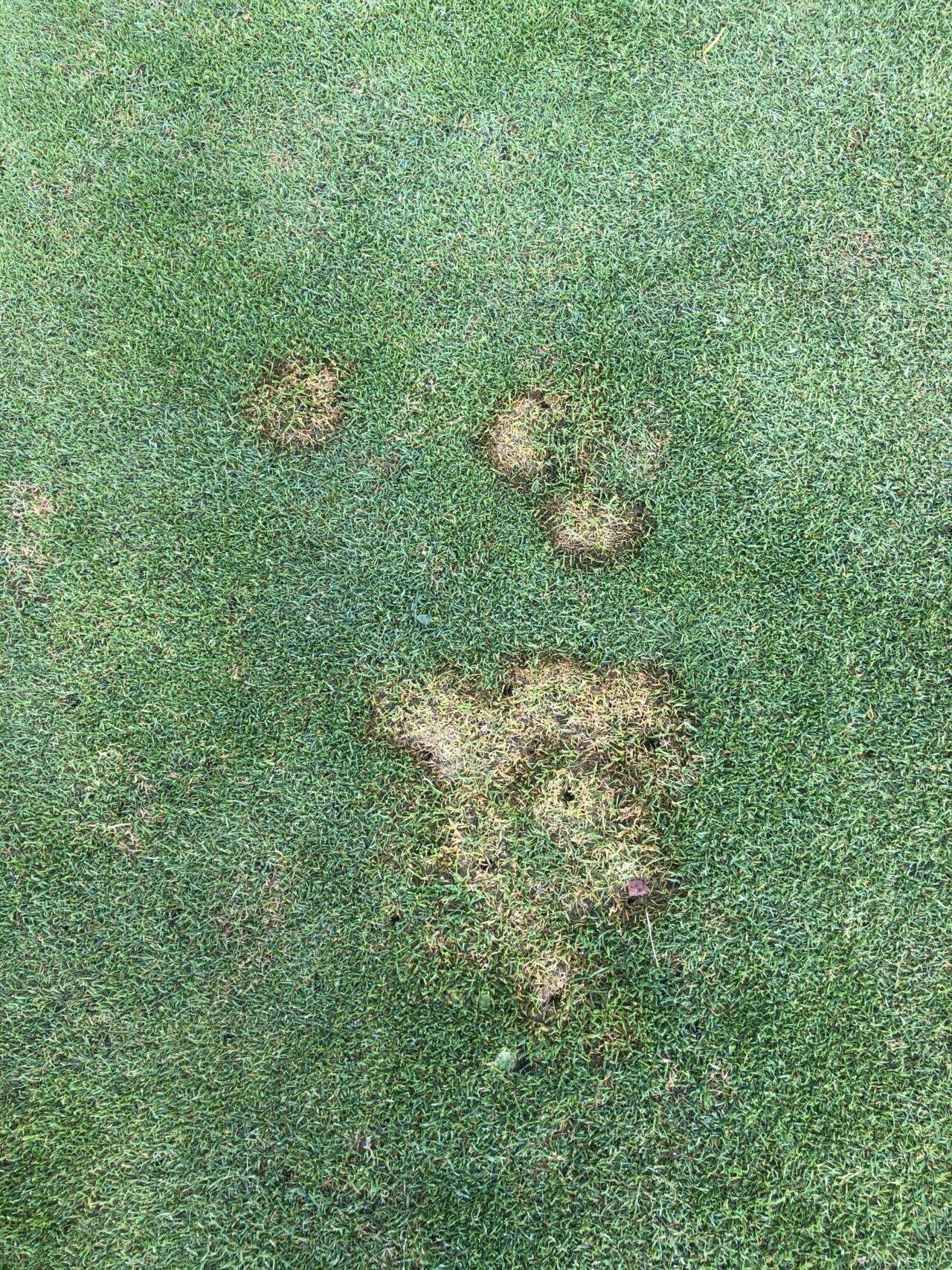
Microdochium patch (snow mould) is caused by the pathogen Microdochium nivale. The pathogen can activate, grow and multiply within a fairly wide temperature range, but its optimum lies at temperatures of 0–7 °C. It is challenging for the plant when the aggressiveness of snow mould coincides with this temperature range, because at these same temperatures the plant’s growth and its ability to defend itself against the disease are reduced. Temperature and weather type cannot be influenced, but by monitoring changes you can time your measures. Temperature also guides the choice of a suitable plant protection product for the season.
Moisture enables the growth of pathogen populations. Prolonged wetness of the sward increases the risk of snow mould, which is why minimising the moisture of the sward and improving drainage and air circulation are key IPM measures.
Removing dew daily is a simple but effective method. Dew can be removed with brushes, ropes or by rolling. Studies have shown that rolling removes dew most effectively and has a greater effect on preventing disease than other methods. It is worth remembering, however, that late in the season, as moisture increases and accumulates in the soil, excessive rolling may also begin to have negative effects on the turf.
Disease forecast models and TurfAdvisor
Combining weather and condition data with disease forecasts helps to time treatments preventively, rather than only once symptoms have appeared. Syngenta’s TurfAdvisor app brings this data into the greenkeeper’s hands: it provides readily available data to support more informed course management decisions.
In the TurfAdvisor app you will find a section called the GreenCast Microdochium model, where you can monitor daily disease pressure on your own course. In the model, disease pressure is described on a scale from zero to four, with four indicating the highest disease pressure. It is worth knowing one detail about the model, however: it requires a rain event within the last three days and does not take dew or irrigation into account. The TurfAdvisor app is available for download from the App Store and Google Play.
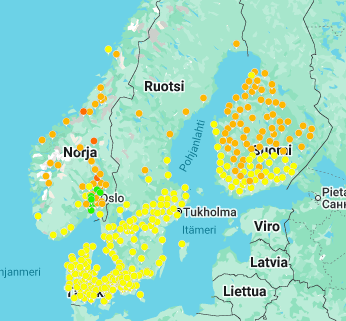
Disease pressure starts to stir in the Nordic countries at the turn of September. Access the live map via this link .
2. The right products at the right time
Once the conditions have been identified, the right product is chosen for the right moment. Registrations in Finland, Sweden and Norway differ from one another, so each course must manage its number of applications in accordance with local regulations.
Heritage, Ascernity, Instrata Elite and Medallion TL are suitable for controlling snow mould. The products have different properties that determine the best time of use. From these products a comprehensive autumn control programme can be built. All the products have demonstrated good efficacy against snow mould.
Heritage and Ascernity are systemic products and provide good efficacy for disease control in early autumn. Ascernity has proven to be a highly effective way of stopping the disease if it has already broken out.

A little later, as growth begins to slow down, both a systemic and a contact mode of action are needed. Instrata Elite is an excellent option for this transition. If the weather stays mild for longer, there may be a need to use a combination product several times, but due to the restriction on the number of applications it is not possible to spray Instrata Elite. In that case, FR321 is a good option.
FR321 is a Syngenta combination product consisting of Heritage, Medallion TL and Ryder. he FR321 pack is not currently sold in the Nordic countries, but you can mix the combination yourself from the individual products. An effective combination is created when Heritage is used at 300 g, Medallion TL at 2 L and Ryder pigment at 1 L per hectare.

In FR321 combination Ryder plays an important role.
Ryder pigment has been found to enhance the effect of plant protection products. Ryder increases the amount of active ingredient that ends up inside the plant, and thereby its effectiveness. We recommend adding Ryder to all autumn plant protection sprayings.
As the temperature falls more permanently and the plant’s growth ceases, it is time to switch to a contact product. Medallion TL provides protection from the outside of the plant by adhering to the outermost wax layer of the leaf. In dry conditions its effective period is long and it protects the plant even under snow cover.
Moisture is essentially linked to the effective period of active ingredients: the wetter it is, the faster the active ingredient breaks down and the effect disappears. For this reason, the moisture accumulating under snow cover, for example, weakens the efficacy of Medallion, whereas under dry snow the effect lasts considerably longer.
The products have clear temperature recommendations for autumn snow mould control. Products with a systemic mode of action should be used while the plant is still active and the temperature is above 8 °C. Heritage and Ascernity are indeed the best choices for early autumn, when the plant’s metabolism is still running and the active ingredients protect the plant from within. When temperatures begin to fall and the plant’s growth also slows down, a combination of a systemic and a contact product is beneficial. Instrata Elite and FR321 have proven to be good intermediate choices when the temperature is above 5 °C. When the temperature drops below 7 °C and the forecast indicates that the weather will cool down permanently, the contact product Medallion TL can be brought into use to protect the plant during dormancy.
Variation is the core of resistance management. Repeated use of the same active ingredient group increases the risk that the pathogen will develop resistance. Varying the active ingredients and modes of action is therefore essential. In addition, products are always sprayed at full dosage in order to manage resistance.
3. Spraying technique: small things determine the outcome
Even the best product will not work at full efficacy if the spraying technique fails. The aim is even coverage and good absorption into the plant leaf. In autumn the weather conditions often do not offer the best possible spraying opportunities, so the importance of details is emphasised once again.
Factors that have a substantial effect on the efficacy of a plant protection spray:
Tank mixes – When spraying opportunities are less frequently available, there is a great temptation to apply the plant protection product, wetting agent, fertiliser, biostimulant and so on in a single spraying. Some products support one another in a tank mix, but there are also products that may impair the effectiveness of another product. In addition, products may differ in their recommended water volumes and nozzle recommendations. Prioritise the most important element of the spraying and plan the tank mix accordingly. Also remember the correct order in which the products are added to the tank.
Nozzle selection – so that the product ends up where it is intended. Syngenta’s XC nozzles are designed for exactly this: they ensure an even spraying result even in difficult conditions, and the rearward-angled nozzle compensates for the forward movement of the sprayer and produces an evenly comprehensive spraying result. Wind weakens coverage and causes spray drift. XC nozzles help here, because their unique orifice structure and air-induction technology significantly reduce spray drift.
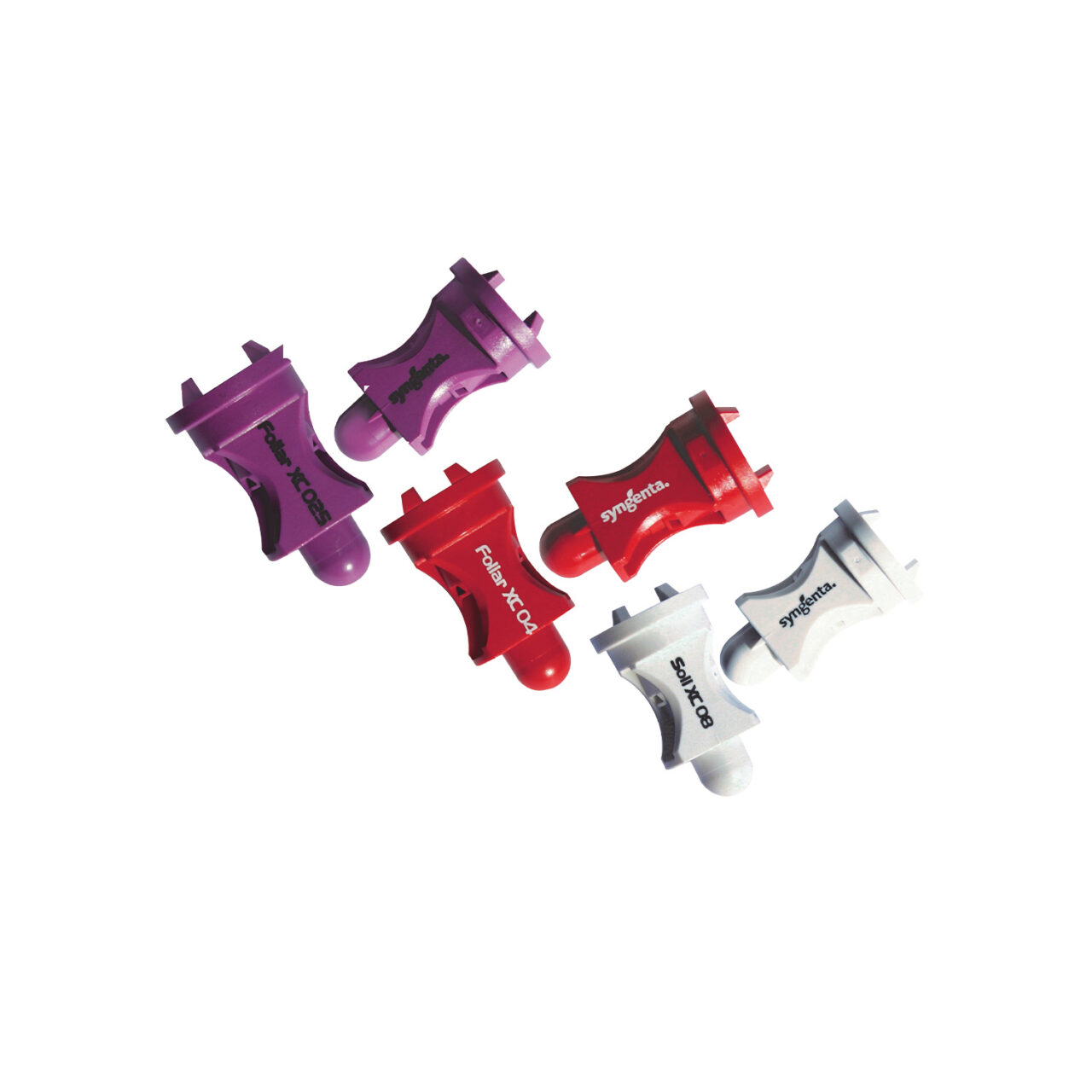
Finer nozzles are recommended for foliar-acting fungicides: the 04 XC nozzle is recommended for foliar-acting fungicides at a typical water volume of 220–400 l/ha and a driving speed of 5–7 km/h.
Spraying pressure – aim to keep the pressure in the optimal range. XC nozzles are designed to be used at a pressure of 2.0–3.0 bar, with the optimum at 2.5 bar. When the pressure is set correctly and is stable, the nozzles also produce a droplet of the desired size: too low or too high a pressure creates more variation in droplet size and in the outcome.
Water volume – In autumn sprayings the water volume must not be too high. A lower water volume generally increases retention on the leaf surface. Too high a water volume does give broader coverage, but excess water causes liquid to accumulate on the leaf, which increases the risk of the liquid running off the leaf. With plant protection products it is good to follow the recommendations given for each product and to fine-tune the water volume to match the level that provides sufficient coverage and persistence on the leaf.
Speed – too fast a driving speed can increase pressure and spray drift. Speed directly affects the evenness of coverage and must be matched to the nozzle. For example, with the finer 025 XC nozzle the recommended driving speed is 3–5 km/h, whereas with the 08 XC nozzle intended for soil-acting products and wetting agent treatments the speed is 5–7 km/h and the water volume 450–1000 l/ha.
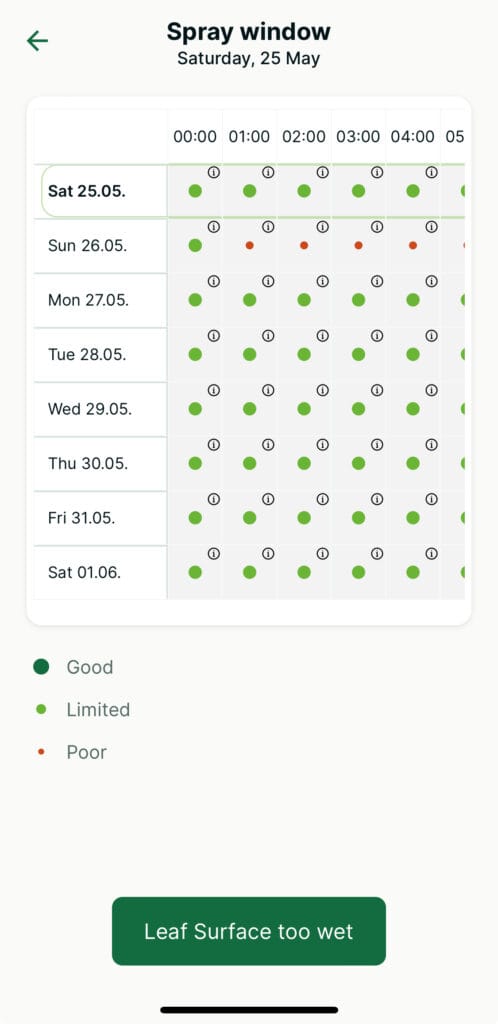
Leaf moisture and absorption – Moisture on the leaf surface reduces the efficacy of the spraying, because it causes droplets to run off the leaf surface. When the aim is to get the active ingredient onto the leaf, the leaf should be as dry as possible at the moment of spraying in order to achieve the best result. Absorption speed and rainfastness vary between products, and the stated values apply when spraying is done on a dry leaf. A leaf that is already wet therefore reduces the adhesion of the active ingredient, and the time required for rainfastness is also extended.
Summary
Successful autumn plant protection is a whole: monitor the conditions, anticipate disease pressure, vary the active ingredient groups to avoid resistance, and invest in spraying technique. In this way the playing surfaces remain of high quality throughout the challenging end of the season, and the start of the next season is improved.
Would you like a tailored autumn plan for your course? Get in touch with our sales team and we will find a suitable programme for your specific conditions.